


Altuna


Altuna
Altuna (5a Avenida, Zona 1, Ciudad de Guatemala) – this restaurant has been in
business in the capital for generations (serving mainly seafood and Spanish specialties,
such as paella, and callos a la madrileña). This space has several rooms that open to a
skylit patio.
BUS

Bus
BUS – apparently, Guatemala’s government doesn’t have a budget to launch a Metro
train service that’s seen in other major cities elsewhere, so the local bus service is the
way to go for public transportation. The local bus service that operates in the capital is
“TransMetro”. It has its own separate fixed routes within the city streets. It’s safe and
easy to locate. Fare: Q1.00 per ride. Once on the Transmetro Station, you don’t have
to pay again to use the service. Within each station there is a secure staff working for
your safety.
There are currently eight bus lines that cover the capital. Here is info on those routes:
https://rutastransmetro.muniguate.com/?c=Estacion&a=Lineas
Aside from TransMetro (which operates within major areas of the capital), another bus
service (TransUrbano) covers routes going to outerlying parts of the capital (including
Zone 12, 21, 24, and 25). Fares may change in some areas (from Q2 to Q5 per ride).
More info can be found on those routes here: www.transurbano.com.gt
TAXI

TAXI
TAXI – taxis in Ciudad de Guatemala are independent and set their own rates. For
example, “Taxi Amarillo Express” (one of the more popular services there) has a
starting fare of Q4.80 (and Q0.80 for every 33 seconds of driving or waiting time). One
should check the fare before boarding any taxi in the capital.
The following taxi services operate in Ciudad de Guatemala:
Checker Taxis Guatemala: +502 4288 4486
Taxi Amarillo Express: +502 2470 1515
Taxis en Guatemala: +502 5665 6618
Transportes Monja Blanca: +502 7961 8484
Transportes Rebuli: +502 2230 2748
Keep in mind when negotiating with taxi drivers that the cost of getting to your
destination can run from a minimum of Q25 up to Q200 or more, depending on the
distance. However, you can bargain the price to the driver on any circumstance and get
a great deal.
Note: Uber now exists in Ciudad de Guatemala. See its web page for details:
https://www.uber.com/global/en/cities/guatemala-city/
ALQUILER DE COCHES

CAR RENTALS
ALQUILER DE COCHES – las siguientes agencias de alquiler de autos operan en Ciudad de Guatemala:
Avis: +502 2324 9000
Presupuesto: +502 5290 3447
Dólar: +502 4720 5700
Hertz: +502 2314 4444
Nacional: +502 2362 3000
Ahorro: +502 2277 9070
Yaxha

Yaxha
Yaxha -the name of this ancient site means “green water” and in this city there are more
than 500 monumental buildings between squares, walkways, astronomical complexes,
a commemorative square with two twin pyramids and the Acropolis, and an area
inhabited by the Mayan aristocracy.
Currently from the highest monument, Temple 216, you can see the jungle and the
lagoons of Yaxha and Sacnab, within the framework of the Mayan Biosphere Reserve.
The park is a refuge that allows to appreciate a balanced combination of biodiversity
and pre-Hispanic cultural heritage. Due to the presence of impressive lagoons and
wetlands that are part of the main migratory bird routes, it has been recognized as a
wetland of world importance.
In this area there are four main cities, Yaxha, Topoxte, Nakum and Naranjo; They
played a very important role in the social and political organization of the central
lowlands for more than 1500 years (800 BC-1450 A.D.). It is possible to visit the first
three cities, Yaxha being the most accessible and from where you can start the visit to
the park. During the walk it is possible to observe different kinds of animals like
monkeys and birds.
Topoxte
Topoxte
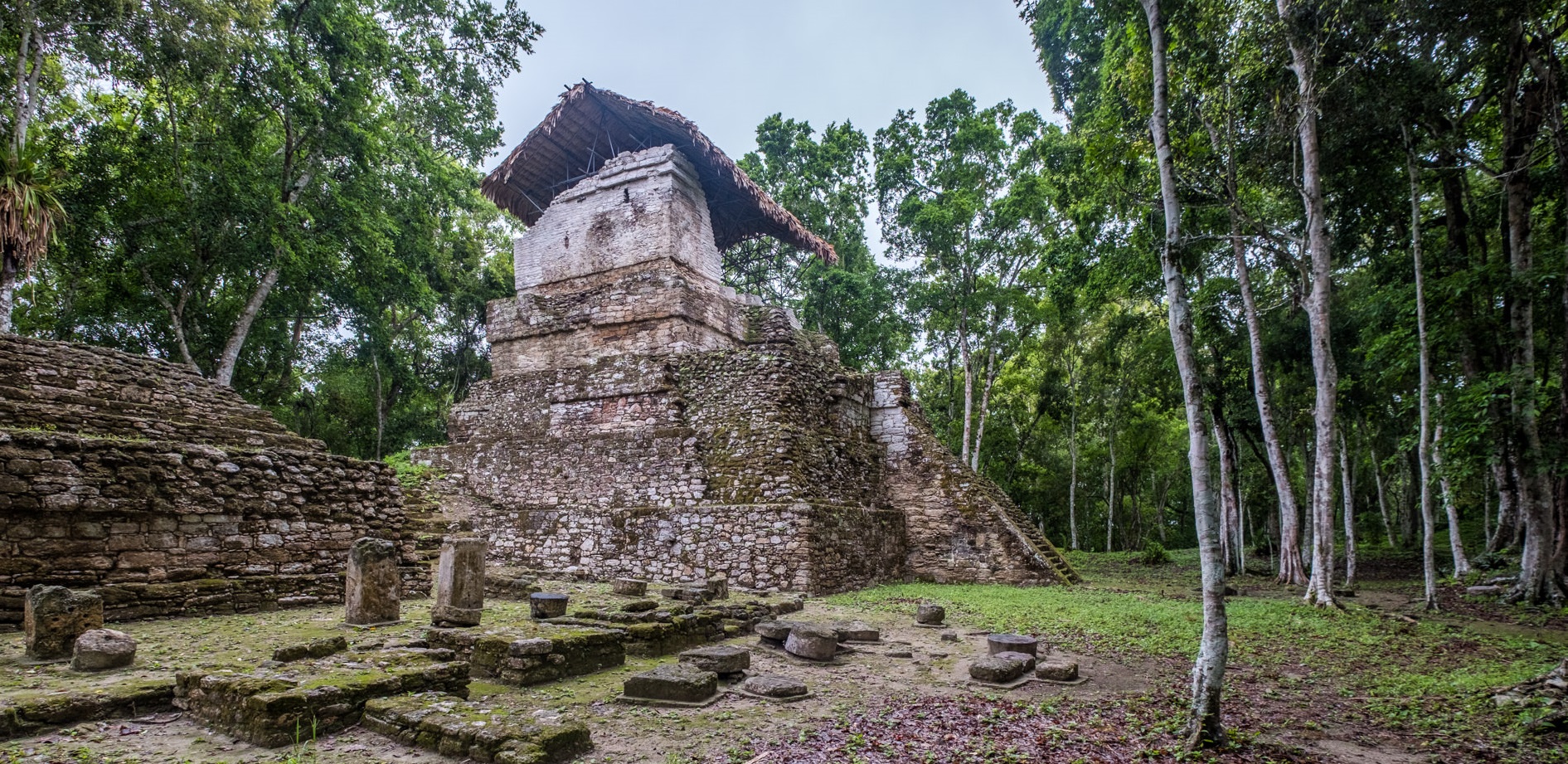
Topoxte – this is a pre-Columbian Maya archaeological site in the Petén Basin in
northern Guatemala with a long occupational history dating as far back as the Middle
Preclassic. As the capital of the Kowoj Maya, it was the largest of the few post-classic
Mesoamerican sites in the area. Topoxté was most relevant during the post-classic era,
when it likely played a role in trade routes between the Mayan highlands and the
Yucatán Peninsula. Three main islands were inhabited during this time, and much
construction took place. It’s thought that the site was left around 1450 AD, although the
exact reason for its abandonment is not known.
Topoxté has been surveyed throughout the 20th century, but it didn’t really start
undergoing restoration until the early 1990s. Several temples and plazas are being
restored, the most notable of which is Temple Pyramid C. This structure is the only
post-classic building left in Petén. It shares similar characteristics with other structures
in the Guatemalan highlands and Yucatán Peninsula—its three levels are topped with a
portal supported by two pillars.
Tikal (ciudad antigua)

Tikal (ciudad antigua)
Tikal (ancient city) – the name of this one-time city means “place of voices” and is one
of the largest Mayan cities known so far. It has been a World Cultural and Natural
Heritage of humanity site since 1979. This site has more than 3,000 archaeological
elements, a city that existed between the pre-classic and classical periods. Of the
temples and squares found here, the Plaza Mayor stands out, heart of the
archaeological park of Tikal and is surrounded by temples I (Temple of the Great
Jaguar) and II (Temple of the Masks), the North Acropolis and the Central.
There is the square of the Great Pyramid or lost World, a set of monuments of the
oldest of Tikal and the palace of the windows, with a lot of interconnected rooms.
Temple III or “temple of the Jaguar priest” has different carvings on its lintels. The
temple IV or “Temple of the Double Headed Serpent” is the highest of Tikal, by its 70
meters of height from where we will be able to recreate of one of the most spectacular
panoramas of the park. And the temple VI or “Temple of the Inscriptions”, is named after
the cover of glyphs in its cresting.
Takalik Abaj
Takalik Abaj
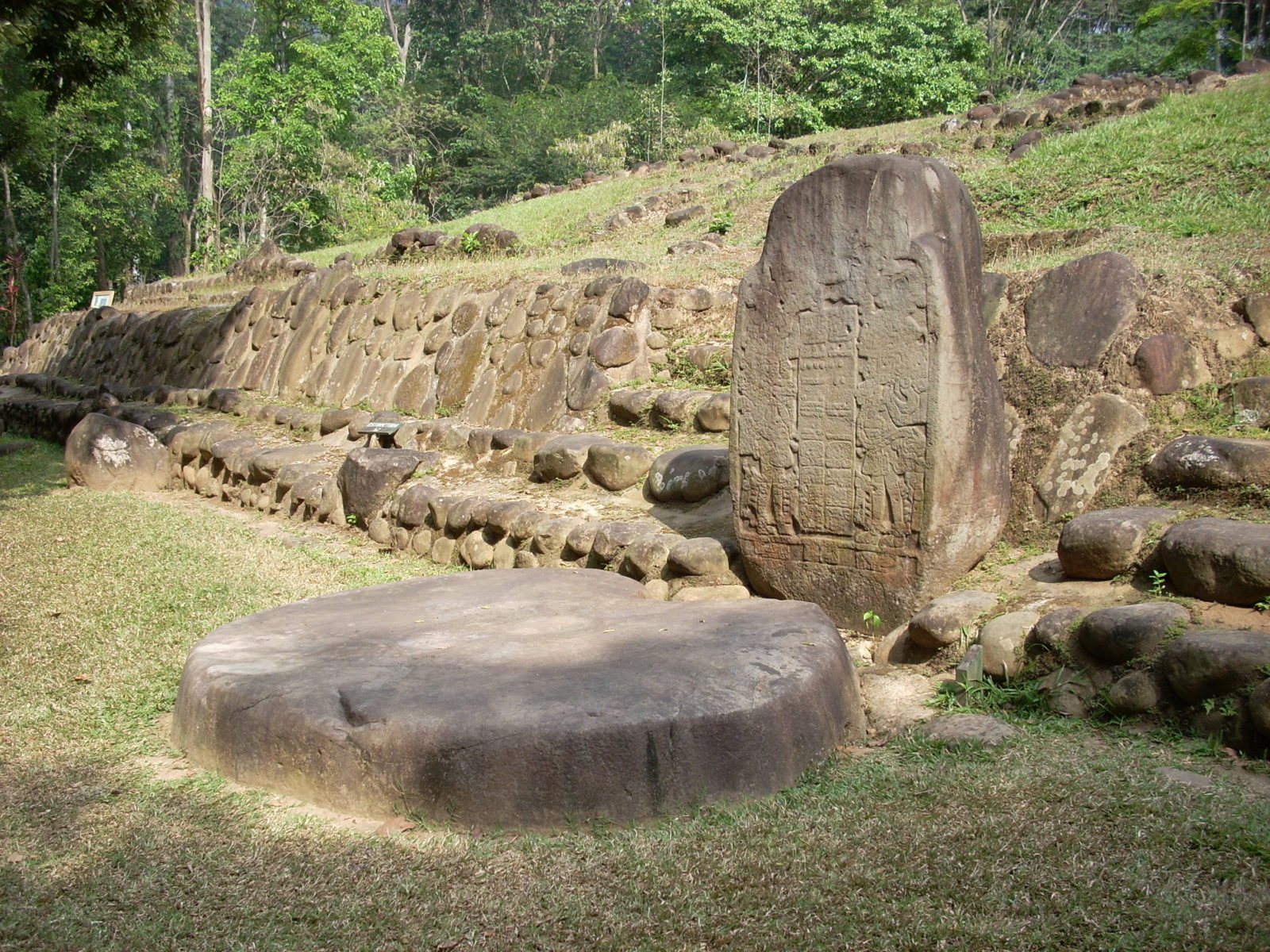
Takalik Abaj — this Mayan site is located 9 miles (15 km) west of Retalhuleu along
Guatemala’s Pacific coast. Takalik Abaj, which means “standing stones,” was once an
important commercial and political center for Pacific coast trade routes. Cacao,
obsidian, salt, pyrite, jade, and quetzal feathers were commonly traded here. First
settled around 1800 BC, the city’s prime came between 800 BC and 200 AD. During
this time, many of the structures that still stand – including sculptures, monuments, and
zoomorphs – were likely carved.
In 2002, an intact royal grave, thought to be the city’s last Mayan ruler, was unearthed.
The excavation made headlines and was even featured in the May 2004 issue of
National Geographic. Over 275 structures have been found here. The tallest structure,
at 53 feet (16 m), is Structure 5, which is found on Terrace 3. Terrace 3 is a rectangular
temple that has three Olmec-style stone heads facing a Mayan altar. Structure 4 has
clear Mayan engravings, and some of the most impressively carved stelae are in front of
Temple 12. Structure 12 is the site’s largest structure, with a base measuring 184 by
138 feet (56 by 42 m) and dating back to 300 AD. There are fascinating sculptures
spread throughout Takalik Abaj, including zoomorphs, Olmecoid heads, and carved
monuments.
Piedras Negras Archaeolgical Site

Piedras Negras Archaeolgical Site
Piedras Negras Archaeolgical Site — the original name of this archeological site
located in La Libertad, Petén is Yo´ki ´ b which means “grand entrance”.
Nowadays it is known to the archaeological site like “Piedras Negras”, and it is due to
the color of rock that was used for the construction of the different structures. It is one of
the largest cities of the classic Mayan period, which has approximately 550,000 meters
where there are clustered structures. It is an adventure to reach this destination
because you must travel by boat through the river Usumacinta, where we can be
astonished by seeing different landscapes and animals like monkeys and birds.
Lago Petexbatún

Lago Petexbatún
Petexbatún Lake – located 7 ½ hours north (391 km) of the capital, this is a small lake
formed by a river of the same name, which is a tributary of the La Pasion river. It is
near Sayaxché, located in the southern area of the Guatemalan department of Petén.
This is one of the country’s eco-tourist destinations. The lake, river and surrounding
forests have many birds, including kingfishers, egrets, vultures, eagles, cormorants and
herons. Within reach of the waterways are five archaeological sites and a pair of jungle-
hideaway accommodations.


