


Cathedral of Guatemala City

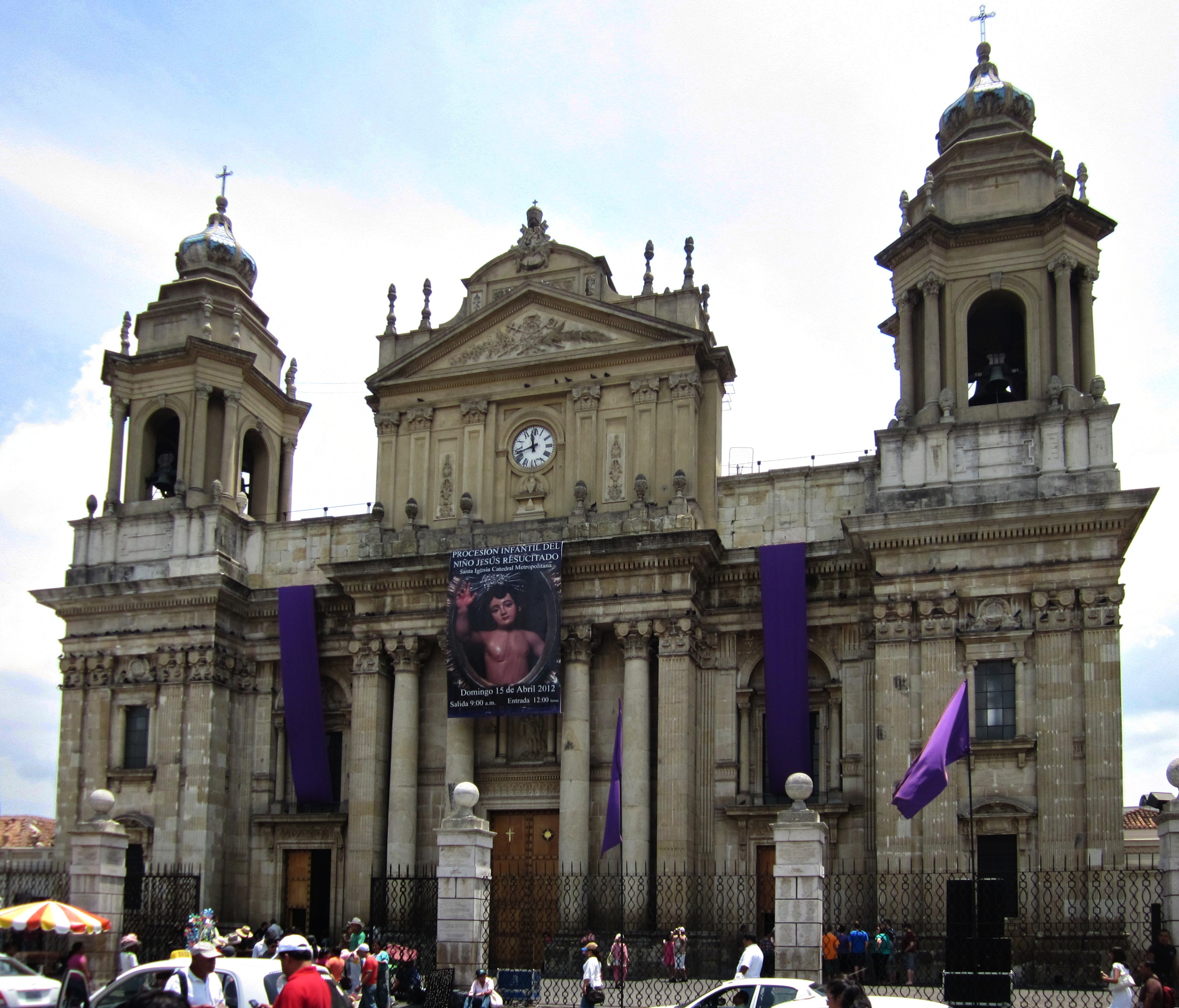
Catedral de la Ciudad de Guatemala
Cathedral of Guatemala City (7a Avenida 6-73, Ciudad de Guatemala) — Guatemala
City (a.k.a. Ciudad de Guatemala) was not made the capital of the country until the late
1700s, after the tragic earthquakes that devastated the country at that time. This
cathedral was completed in 1815, when the image of the Virgen del Socorro was
installed in the cathedral in the new capital, a more than symbolic event for the
congregation.
Of a notably neoclassical style and after significant reconstruction in the wake of each
earthquake, it is the most important religious building in the capital. It is located at the
heart of the historical quarter, near the National Palace. Interestingly, the gold from the
altarpieces in the former cathedral was melted down to decorate the new ones, just like
the bell from the main tower, which was made from the bronze from the San José
Fortress. Hours: 9:00 am – 1:00 pm & 2:00 pm – 5:00 pm (weekdays); 9:00 am – 1:00
pm & 2:00 pm – 4:00 pm (Saturdays).
Castle of San Felipe de Lara
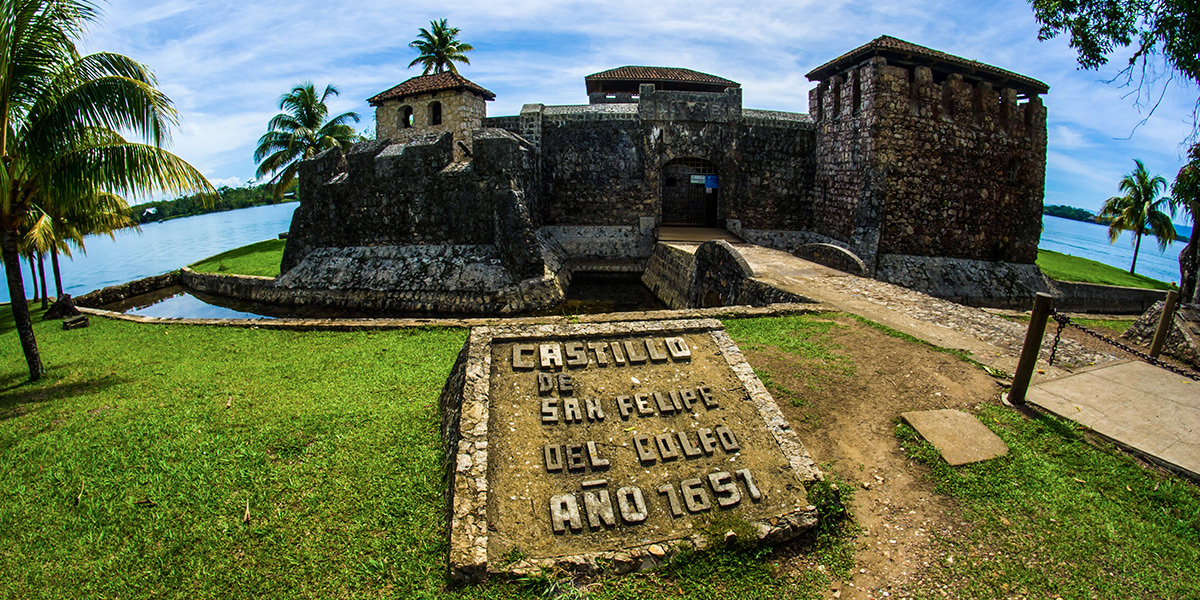
Castillo de San Felipe de Lara
Castle of San Felipe de Lara (Río Dulce, Livingston) – this is a Spanish colonial fort
at the entrance to Lake Izabal in eastern Guatemala that was built in 1651. Lake Izabal
is connected with the Caribbean Sea via the Dulce River and El Golfete lake. The fort
was strategically situated at the narrowest point on the river, and existed to protect the
area from English pirate attacks. During one of those attacks (in 1686), pirate set afire
the castle’s palm-leaf roofs, which destroyed the castle then. It was later rebuilt.
Admission: Q25. Hours: 8:00 am – 5:00 pm daily.
Casa Popenoe
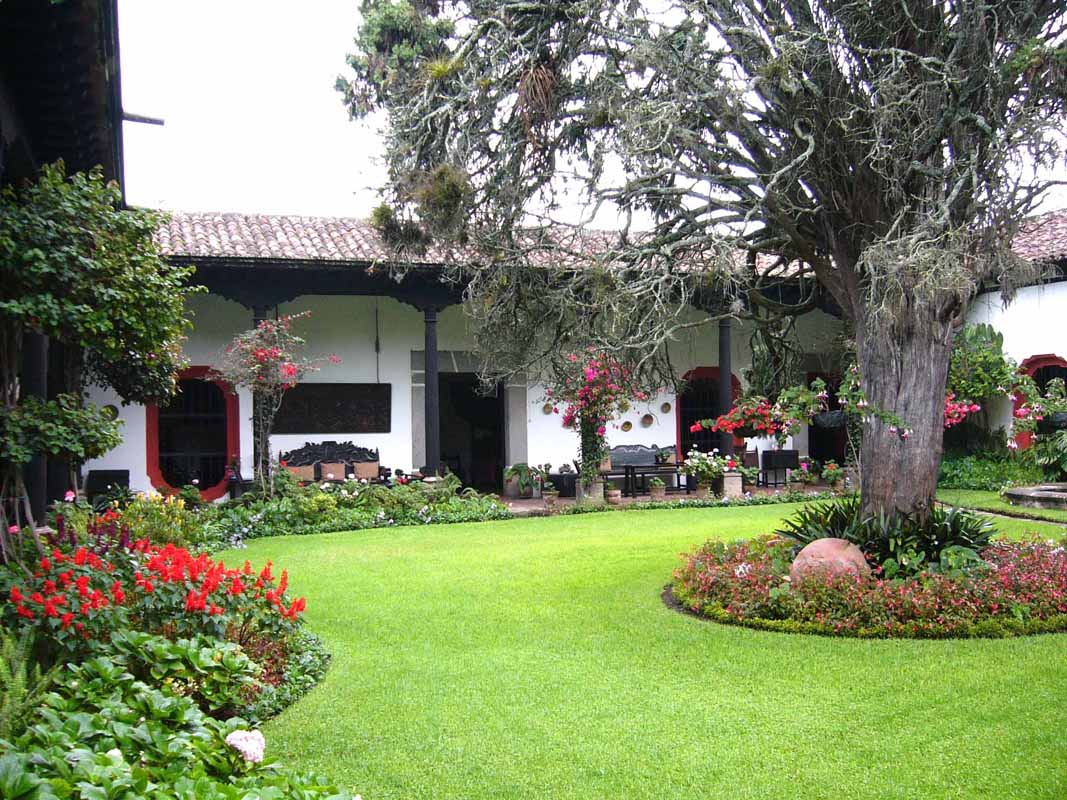
Casa Popenoe
Casa Popenoe (Sitio Escolástico, 6 Calle Oriente #16, Antigua) – this house, which
was originally built during the 18 th century, was bought by American agricultural scientist
Wilson Popenoe in 1930. Popenoe once worked for both the U.S. Dept. of
Agriculture/USDA, and the agribusiness giant, United Fruit Company). In the early
1900s, Popenoe was responsible for bringing Central American avocado seeds to
California, which contributed to the growth of that state’s avocado industry by World
War II. In 1946, in recognition for Popenoe’s role in bringing Guatemalan avocados to
America, the California Avocado Society presented a plaque to the city of Antigua
(which Popenoe credited with growing the best variety of avocados anywhere in the
country). The Popenoe family donated this home to the Universidad Francisco
Marroquín in 2007.
Admission: Q80 per person. Hours: 9:00 am – 4:00 pm (Monday-Friday), 9:00 am –
11:00 am (Saturdays). Tours must be arranged in advance via email
(casapopenoe@ufm.edu) or phone: +502 2413 3258
Arco de Santa Catalina
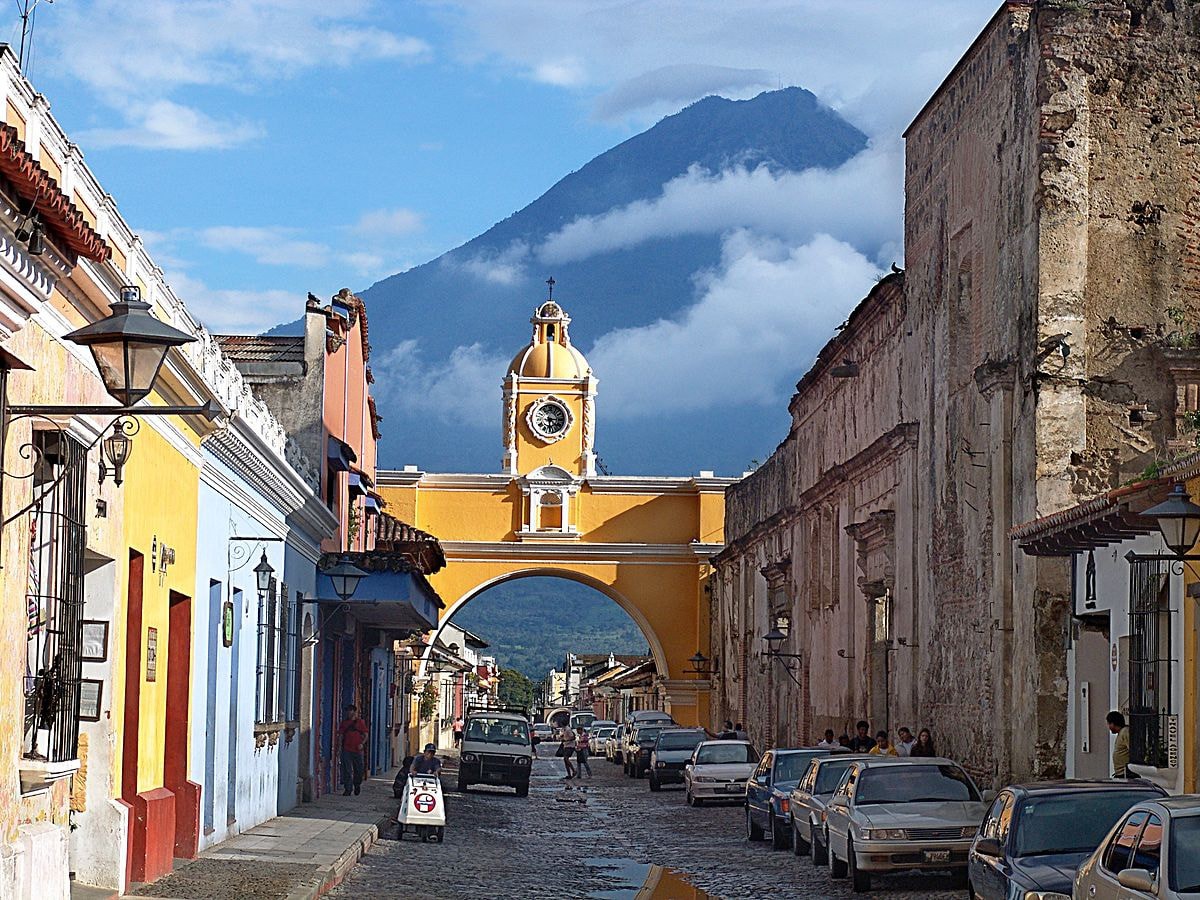
Arco de Santa Catalina
Arco de Santa Catalina (5a Avenida Norte, Antigua) — the Santa Catalina Arch is
one of the distinguishable landmarks in Antigua — located on 5th Avenue North. Built in
the 17th century, it originally connected the Santa Catalina convent to a school, allowing
the cloistered nuns to pass from one building to the other without going out on the
street.
Earthquake activity in 1773 damaged the convent and arch. Though partially restored,
the convent was finally abandoned in 1776 and refurbished in 1850. In the 1890s, more
renovations to this site resulted in the addition of a clock tower. When another
earthquake struck the town in 1976, the clock incurred some damage, and was repaired
years later (in 1991). Nowadays, the arch is the town’s more photographed attraction,
as well as being a gathering place for New Year’s festivities.
MUSEOS / MONUMENTOS / OTROS SITIOS

MUSEOS / MONUMENTOS / OTROS SITIOS
Advisory: since many of the tourist sites listed in this report are outside of the capital
(Guatemala City), first-time visitors should sign up with a tour group that can provide
adequate transportation to and from such destinations. This is especially the case with
the ancient Mayan ruins and related archaeological sites (which require a day trip to see
them).
Sobre Guatemala

Guatemala
Guatemala has the distinction of being the home of one of the Americas’ ancient
cultures: the Mayan civilization. That indigenous civilization, which goes as far back as
2,000 BC, was based mainly in modern-day Guatemala, and to a lesser degree in
southern Mexico (including Quintana Roo, Yucatan and Chiapas regions), and portions
of Belize, El Salvador, and Honduras.
The Mayan civilization (which was centered in the highlands of Guatemala) came to an
abrupt end when the Spanish conquered the country in 1525. Spanish colonial
authorities established the Captaincy General of Guatemala to govern over Central
America (which included what’s now southern Mexico, El Salvador, Honduras,
Nicaragua, Costa Rica, and Guatemala). When the Central American countries
became independent of Spain in 1821, Guatemala became part of the Federal Republic
of Central America (which included the other modern-day Central American countries,
except for Panama – which was part of Colombia at the time). Due to unresolved
political differences, that Federation dissolved, with Guatemala and neighboring
countries becoming independent of one another in 1841.
Since then, Guatemala went through a series of authoritarian regimes. By the early 20 th
century, much of the country’s economy was agricultural, and was controlled by foreign
agribusiness interests, in particular the American firm United Fruit Company (UFC) –
whose interests were the industrial-level production & export of the region’s agricultural
crops (ranging from coffee to sugar cane, bananas, etc.). Because of their heavy
reliance on agricultural exports at the time, Guatemala, along with neighboring
Honduras and other Central American states, were the inspiration behind the political
term “banana republic” (used by journalists to describe the governments that existed in
that region).
During the mid-1940s, a pro-democracy movement that pushed for open elections
resulted in a reformist government (led by Guatemalan politician Juan José Arévalo,
who instituted a literacy program and a freer electoral process). One of his supporters,
fellow politician Jacobo Arbenz, was elected into the country’s presidency in 1951, who
put through a sweeping agrarian reform law (which confiscated idle lands and gave
them to landless peasants). Since such measures angered international agribusiness
interests, elements of the U.S. government (concerned about the alleged spread of
Communism in the region) encouraged the eventual overthrow of Arbenz and his
government by that country’s military in 1954 – which included the aerial bombing of
portions of the capital (such as the government’s oil reserves), along with smaller towns.
For decades since that dramatic event, the country had been ruled by the military.
For all intents & purposes, Guatemala was in a state of civil war from 1960 to 1996, due
to the military regime’s policies. On and off military operations in the country’s Mayan
highlands were conducted over time (targeting rebels who were suspected of taking
sanctuary in those regions). Guatemala’s civil war never gained much international
media attention, despite U.S. President Ronald Reagan’s concern over the spread of
Communism in Central America (highlighted by the rise of the Sandinista government in
Nicaragua during the 1980s, Reagan’s support of “contra” rebel forces against the
Sandinistas at that time, a civil war raging in El Salvador, and neighboring Honduras
and Costa Rica getting caught up in those conflicts at the time). What little media
attention Guatemala generated during the 1980s were massacres ordered by the
military ruler at the time (Gen. Efraín Ríos Montt – who received not only support from
Reagan, but from staunch anti-Communist conservative American evangelical
preachers like Jerry Falwell and Pat Robertson). By 1996, a peace accord was signed
between the Guatemalan government and was what was left of that country’s
insurgency, which never achieved the prominence of the FMLN guerrillas in neighboring
El Salvador during the 1980s (who successfully negotiated a more favorable agreement
with conservative Salvadoran rulers when their civil war ended in the early 1990s).
In recent times, Guatemala, no longer under military rule, has been striving to rectify its
controversial period of the 1980s, encouraged by local human rights activists like
Rigoberta Menchú (who won a Nobel Peace Prize in 1992 for her efforts to promote
indigenous rights and justice against members of the country’s military). Guatemala’s
now-civilian-led government wants to diversify its economy away from its agrarian past,
by taking steps to increase tourist activity in the country (using its Mayan ruins as a
major attraction). By 2013, some 1.7 million visitors came to Guatemala (an increase
from 826,000 in 2000). That number rose to 2.1 million in 2017, drawn not only to the
country’s Mayan ruins, but to its little-known eco-tourist destinations like Lake Atitlán.
Festivals in Guatemala

Easter in Guatemala.
In Guatemala, for its religious tradition, it is celebrated in each of its municipalities the Titular party or patron feast. This takes place in the week of veneration of the saint or patron saint of each municipality and boom in the particular day with rest for that day, performing special celebrations. For the city of Guatemala, for example, it is August 15th in honor of the Virgen de la Asunción.
Easter in Guatemala is a holiday of great artistic value, in addition to religious fervor. The largest processions are made in Antigua Guatemala and Guatemala City. In these, in addition to the beauty of the walks, the settlers are organized to make rugs which are the biggest attraction of this celebration due to their artistic details that are characteristic of Guatemala and in turn, attract tourists who observe the Detailed elaboration of these. The rugs are made of sawdust, fruits, flowers and different materials, which are an expression of faith and color. In Huehuetenango and other populations of the country, the representation of the Passion of Christ Live is called attention.
Transportation in Guatemala

Transmetro in Guatemala
The Transmetro is a fast transit bus-type public transport system. The service is paid through coins or a smart card type Mifare integrated Guatemalan bus System (follow) in the windlasses that are located in all stations along the route. This is one of the most used roads in cities.

School-type buses for public transport. Guatemala.
The most abundant, especially in the south of the country, are the old school-type buses, in good condition. Only in some sections are saturated with people and is when you have to share seat between 3 people, but generally travel well. In general it is safe to use public transport, but it is true that some routes that lead to Guatemala city (especially east of the capital) and urban routes on the red Buses capital have stories of holdups.

Yellow Cab. Guatemala.
There are three types of taxis, so-called yellow taxis, white taxis and ubers. Yellow cabs have a way of earning profit with a time-based rate system, regardless of distance. With the white cabs it’s different. After agreeing the rate with the customer, they win by getting as fast as possible to their destination, because they win by having a higher frequency of careers. Uber, it’s a new mode of service. Your fee is based on the distance traveled and a small fee for the elapsed time. What’s the best? That depends on the circumstances: the risk, the time and the money you want to invest.

La Aurora International Airport. Guatemala.
International airports are three, in addition to others for national use. La Aurora International Airport is the largest in the country. Serves Guatemala city. The Manuel Estrada Cabrera International Airport of the city of Quetzaltenango, located in Guatemala, serves the city of Quetzaltenango, and the air of Central America, and South America, and western Guatemala. Also known as “Los Altos “, “Xela “, or “Manuel Estrada Cabrera “. Mundo Maya International Airport is one of the largest and most congested airports in Guatemala, after the Aurora, Quetzaltenango Airport and Retahuleu Airport (which is Air Force). It is located 488 km from Guatemala City, in the city of Santa Elena de la Cruz, Department of Petén and serves the central area of the entire department. This airport receives local flights from all over Guatemala, Central America, Mexico and during some times of the United States year.
Temple IV in Tikal.

Temple IV or of the Serpent doubleheaded, Tikal. Guatemala.
Also known as the Temple of the Serpent Doubleheaded, Guatemala’s biggest attraction constitutes one of the most emblematic structures of the Mayan civilization. The temple was built during the reign of Yik’in Chan Ka’wil, the number 27 ruler of the city dynasty around 741 D. This ruler’s victories over other kingdoms located to the east and west of Tikal allowed him to retake dominion over the region to transform the city into one of the most powerful and important centers of the classic Mayan era. Yik’in achieved the construction of new palaces and the expansion of others in the central area of this archeological site. His greatest efforts were aimed at redesigning his real capital by building the causeways that connect the different ceremonial precincts each marked by a temple.
This 70-metre-high temple was used for various ritual ceremonies of the Mayan civilization and is the most frequented within the Tikal National Park, where visitors can climb up and admire from the top incredible landscapes. It is the highest building in the classic Mayan world and arouses the interest of many tourists by the privileged views that offers from its peak both the archaeological site and the natural world that is located in the surroundings of the city. The base of support was the main entrance to the temple and has a staircase on the east side of 46 meters long. The pyramid itself is made up of seven staggered bodies whose plant is rectangular in shape. The temple also has a rectangular floor and consists of three chambers at different levels. The beams of the middle and rear chambers are profusely carved with scenes from the life of Yik’in Chan Ka’wi.
The name of the Temple of Serpent doubleheaded appears to be associated with a deity found carved in one of these beams.
The park is open from Monday to Sunday from 6:00 to 18:00 hours. The entry has a cost of Q 25.00 for nationals and Q 150.00 for foreigners.
Parque Tikal Guatemala.

Parque Nacional Tikal. Guatemala.
Tikal is one of the largest urban centers of pre-Columbian Mayan civilization. It is located in the municipality of Flores in the Department of Petén, in the current territory of the Republic of Guatemala and is part of the Tikal National Park, which was declared a World Heritage Site by Unesco in 1979. According to the Glífos found in the site its Mayan name would have been «Yax Mutul». Tikal was the capital of a belligerent state that became one of the most powerful kingdoms of the ancient Mayas.
Although the monumental architecture of the site dates back to the 4th century BC, Tikal reached its apogee during the classic period, between 200 and 900 D. During this time, the city dominated a large part of the Mayan region in the political, economic and military spheres, and maintained links with other regions throughout Mesoamerica. After the late classic no major monuments were built, some elite palaces were burned and the population gradually decayed until the site was abandoned at the end of the 10th century. With a long list of dynastic rulers, the discovery of many of their respective graves and the study of their monuments, temples and palaces, Tikal is probably the best-understood of the great Mayan cities of the lowlands of Mesoamerica.
The park is open from Monday to Sunday from 6:00 to 18:00 hours. The entry has a cost of Q 25.00 for nationals and Q 150.00 for foreigners.


